Research Task Tiffany Chung
Research the images of the artist’s map drawings and interviews.
I liked the opening introduction in our textbook about how the artist questions who’s story a map represents and the untold stories. She also questions whose story does an artwork represent. As I begin to research her maps these questions resonate with me and help me question my own motivations in the work I want to portray and accomplish. I guess our own motivations are not just about aesthetics or something that looks good, but the motivations go deeper into our conscience, past experiences and how we view the world. The first couple of images of the artist’s work is from the following website.
http://asianartcircle.blogspot.com/search/label/Tiffany%20Chung
Unfortunately, there was no size given, but these two works are embroidered cartography and they depict the migration of refugees.
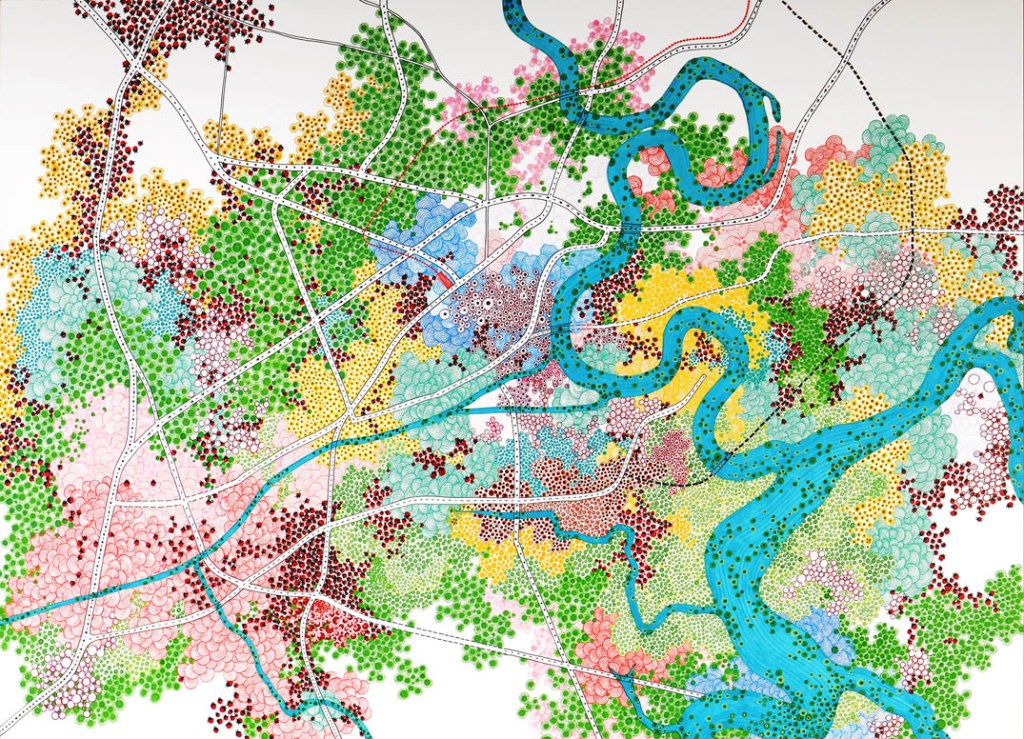
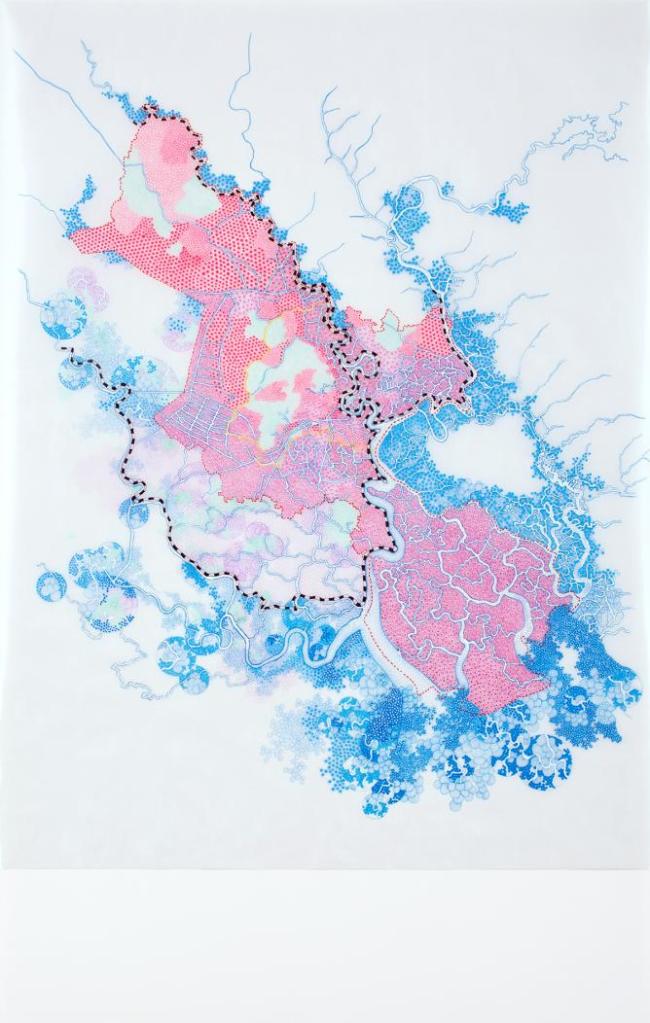
The image below is called Syria Tracker
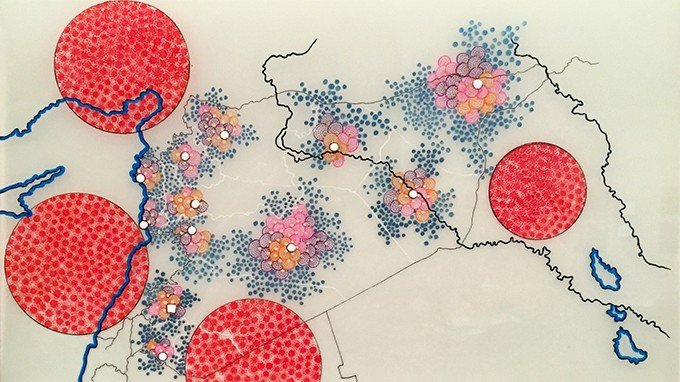
These look amazing and really help me appreciate the skill involved in embroidery. The first interview I listened to was about maps of memory. The artist explained how through the use of creating maps she remaps certain histories. Focusing on refugees who will have gone through horrific journeys she tries to help people and students to make sense of their journeys. She stated that mapping is very subjective and that it is dependent on who is mapping and for what purpose. In this respect she indicated that she tries to reveal more about the truth of events. She gave an example of how the take on a map could be biased. She quoted the Vietnam war is usually portrayed with a lot of American films about heroes but in contrast there is little about the Vietnamese people. The artist advised us that in the Vietnam war 2 million refugees fled by boat. She is of Vietnamese American origin as she fled the country with her parents. She also gave another example about Syria and histories that are forgotten or not known. Mapping Syria involves the border being flanked by two colonial powers such as Britain and France. Due to her work she considers herself to be a research based visual artist. She explained how she researches her subject but she doesn’t like to provide answers but considers herself more to help people question things.
What I also loved was the artists images in watercolour of the refugees fleeing.
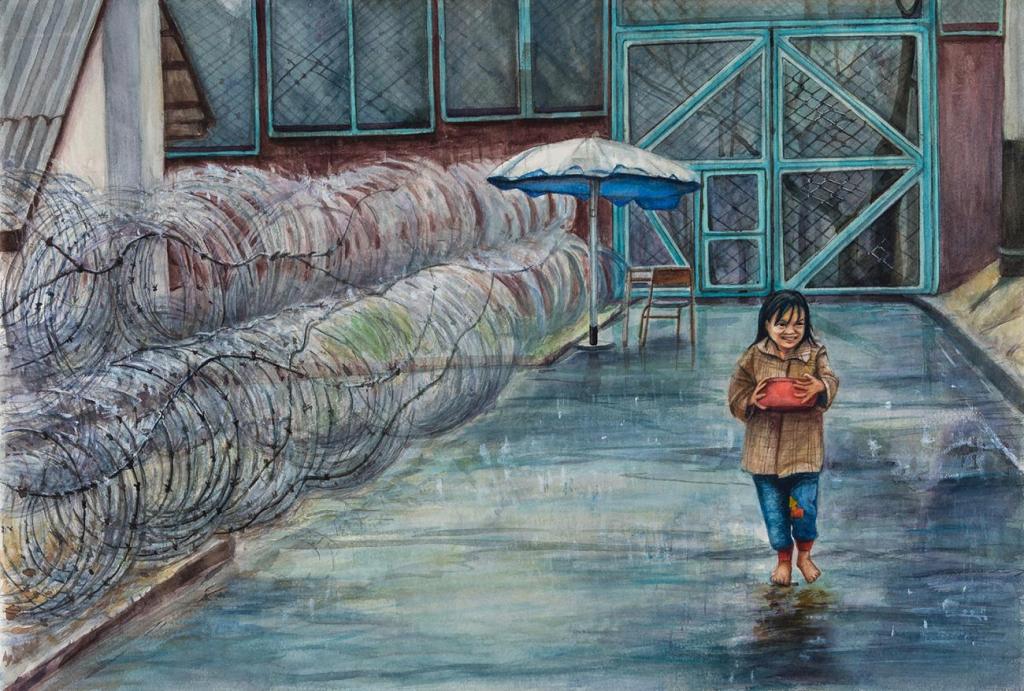
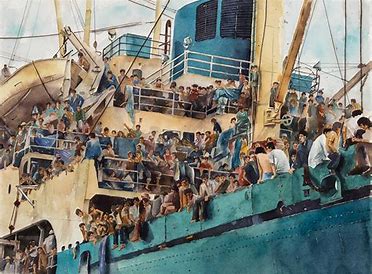
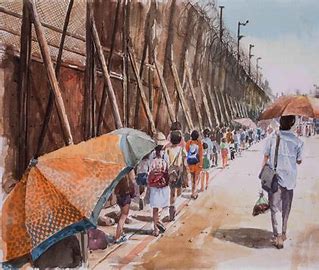
Again I couldn’t find the sizes of these works but I spotted thsome of them in one of the videos and I believe they are quite small works. That being the case they are very detailed. The first two have a similar colour palette with the turquoise blue colours.
Research Task
Adam Dant
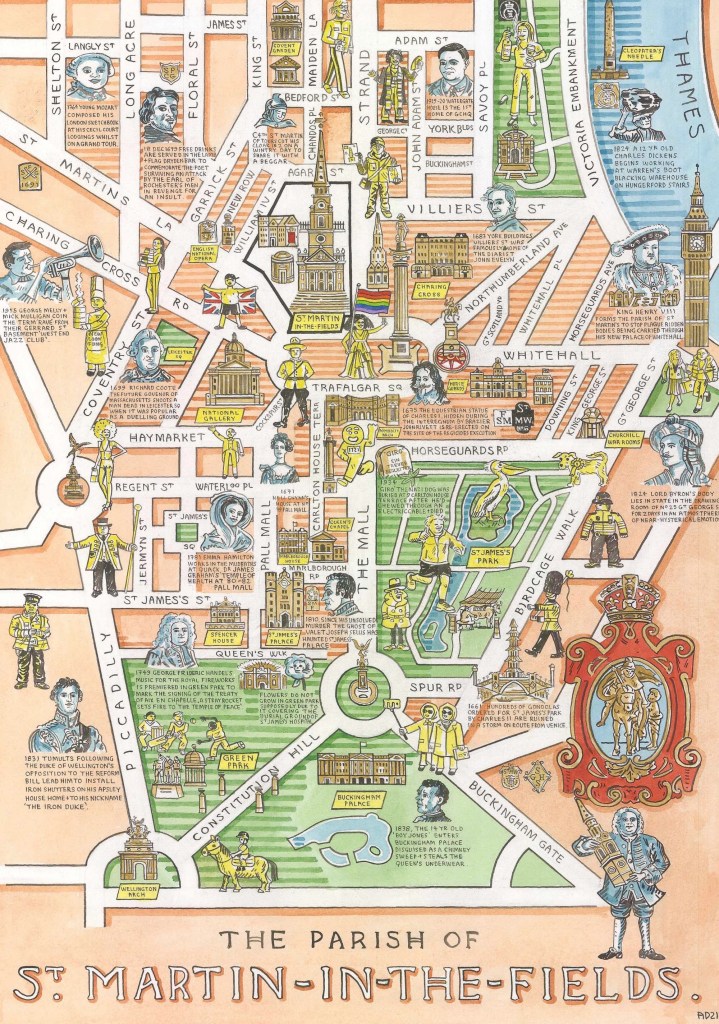
Adam Dant is a British artist and was born is 1967. His early career was as a comics artist. As I began to research his information it’s evident that he has made quite extraordinary and diverse use of maps as the basis for a lot of his work. I include some examples below. This first one below of Martin in the Fields, London almost takes us through a walk in history explaining names of the streets and various events. I can’t help but mention the Duke of Wellington as I live in Wellington. It refers to how he is known as the Iron Duke through erecting iron gates. https://spitalfieldslife.com/2021/05/11/adam-dants-map-of-the-parish-of-st-martin-in-the-fields
The next image is of a work titled Dismantling printing presses at Paternoster Square 2014. It is a watercolour with gold leaf in graphite and is on paper. The size is 1520x1220mm. From looking at the work its evident that he employs numerous techniques in drawing such as hatching and the drawings are very detailed and well accomplished in regard to perspective and subject matter.
My next image and information was from the Tate Gallery.
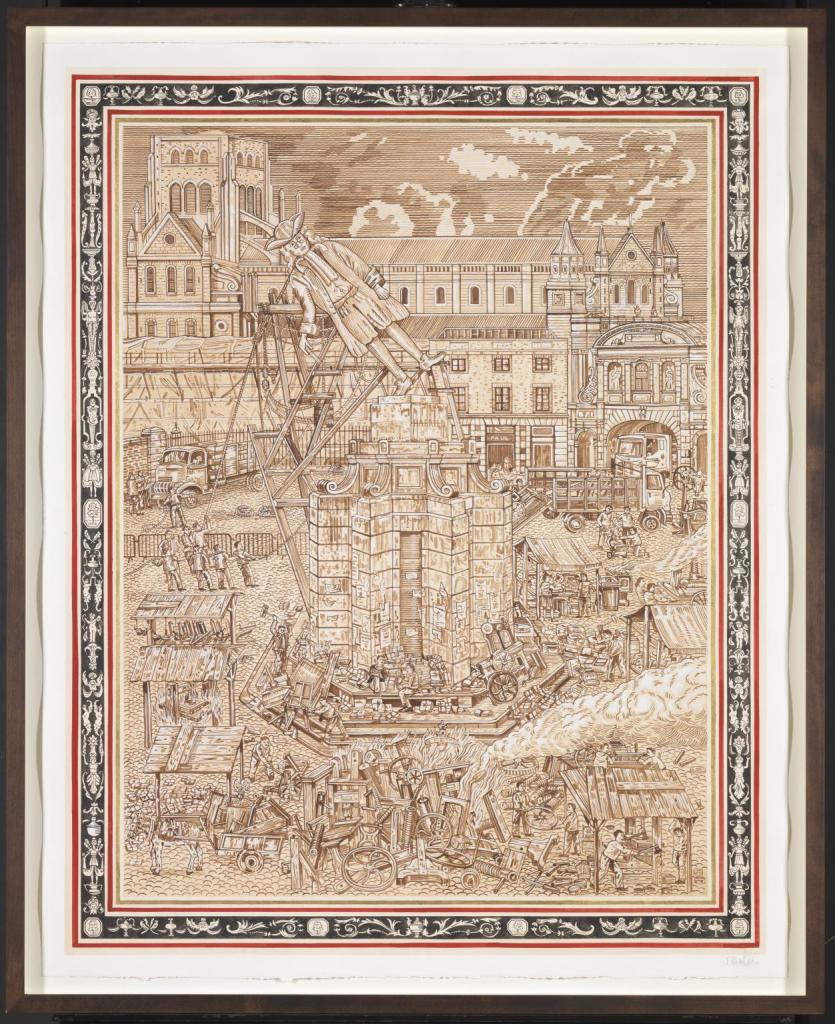
The above is one of five works in Dant’s series Budge Row Bibliotheque. He completed these for the Bloomberg SPACE commission. Dant’s topographies such as this scene can represent factual and fantasy. This work depicts a lost street in London called Budge Row. The events in the scene are around St. Paul’s Cathedral. However, Dant depicts the scene in what is described by the Tate as an anachronistic medieval manner of St. Paul’s Cathedral, rather than the building designed by Christopher Wren. The area in the scene was occupied by printmaking services. Dant depicts the pioneer of printing, Robert Harrild being toppled in a similar manner to how Sadam Hussain’s statue met its demise.
As I begin to research Hogarth I can see why there would be some comparisons with Dant. This image in particular below seems very similar to Dant’s work above on the printing image
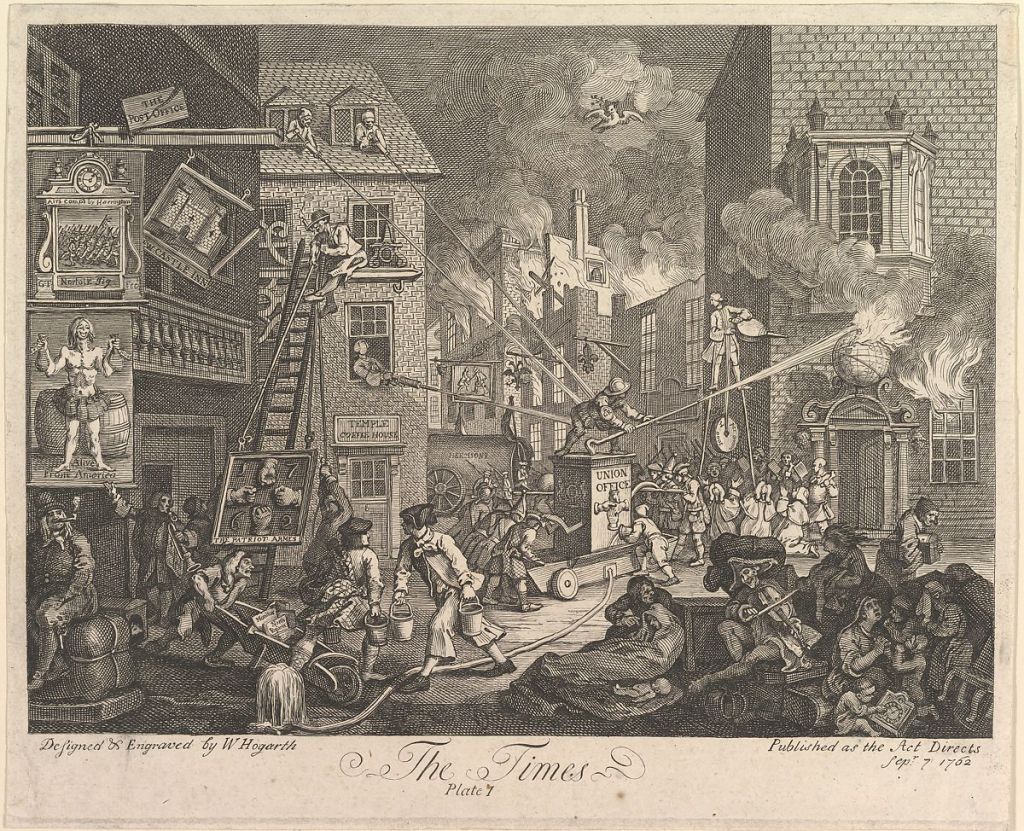
Both scenes are very busy capturing lots of people and action in the streets. The drawings are very similar and both have an element of satire.
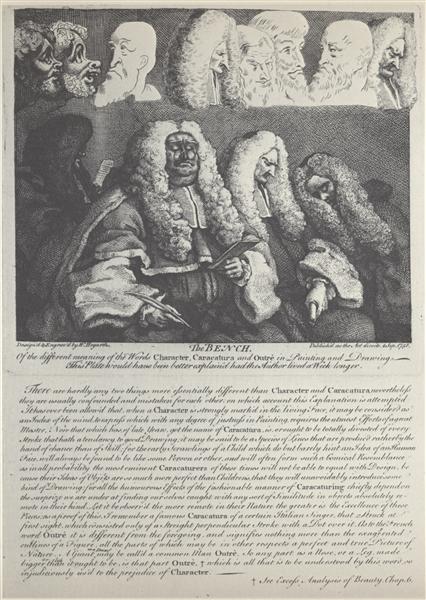
 Drawing 2 Interpreting the environment