Today I revisited The Basins. The allotments, the foraging site, and I walked around the various pathways. I took my small A5 sketchpad and pencil and a willow charcoal stick. I took photos of the allotment and talked to one or two proprietors. I shall put these figures in my drawings although they won’t b recognisable. I took some good photos, chatted then moved on to sketch my rugged walk. I wanted to capture the huge oak tree that looms larger than life. Today all the acorns are fully formed. Sadly, my camera ran out of battery, so I needed to use my camera phone. I also wanted to capture a quick landscape scene as I walked towards a pathway from a bridge that goes over the stream. Some photos of the route and allotment are below.

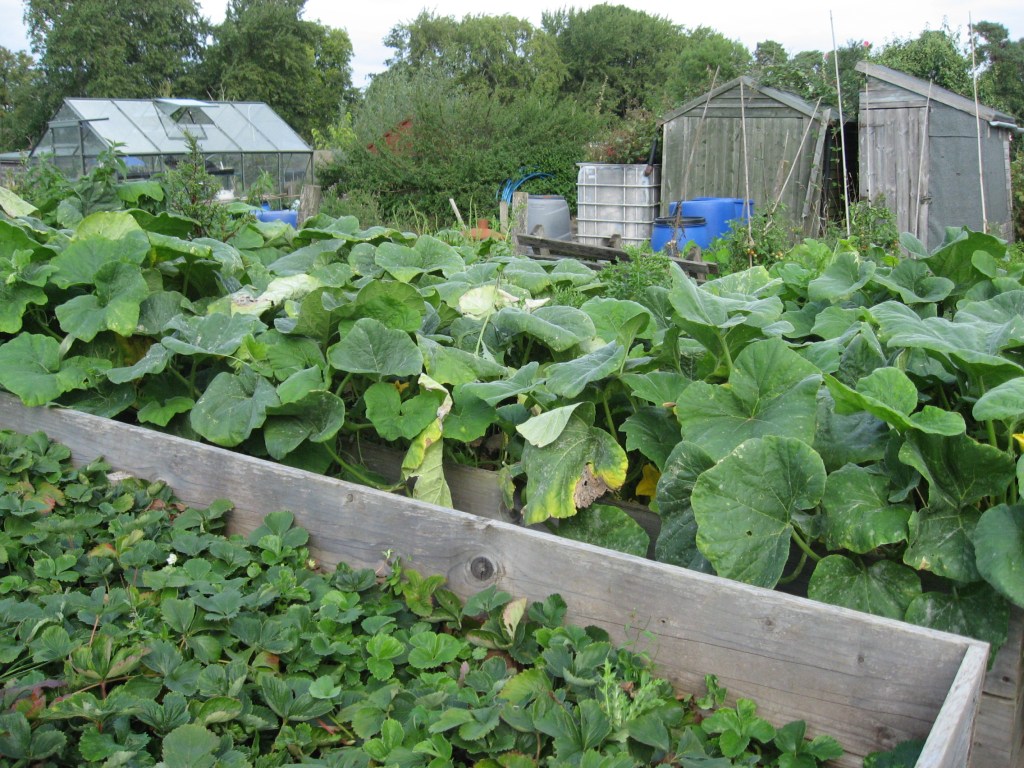
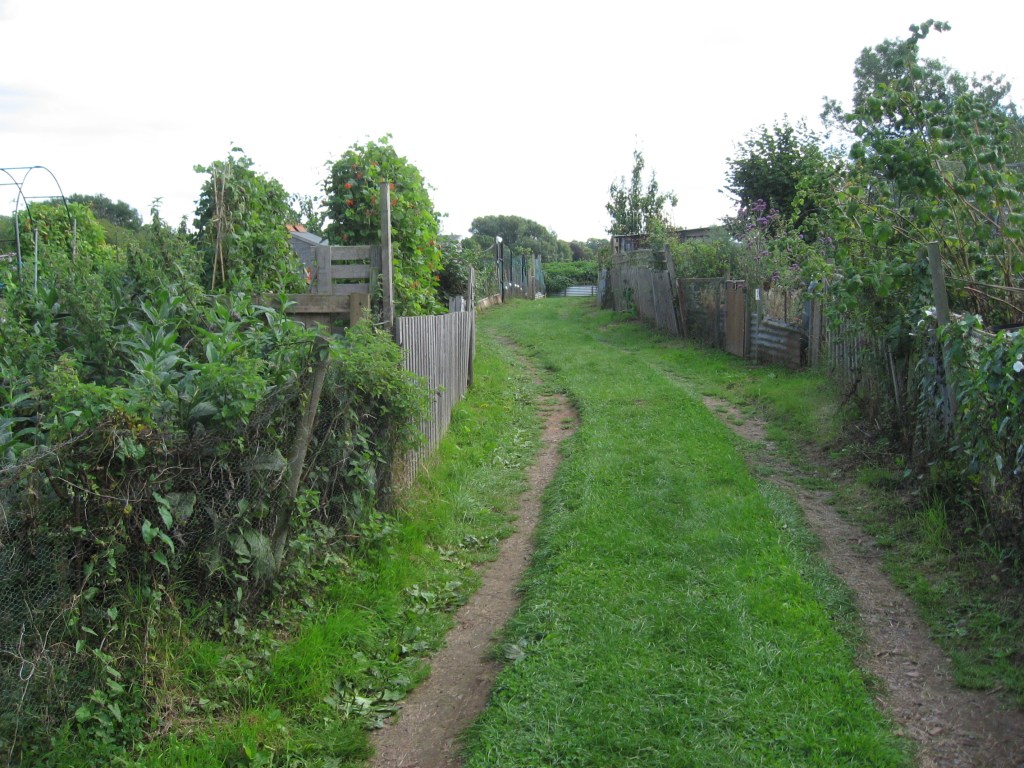
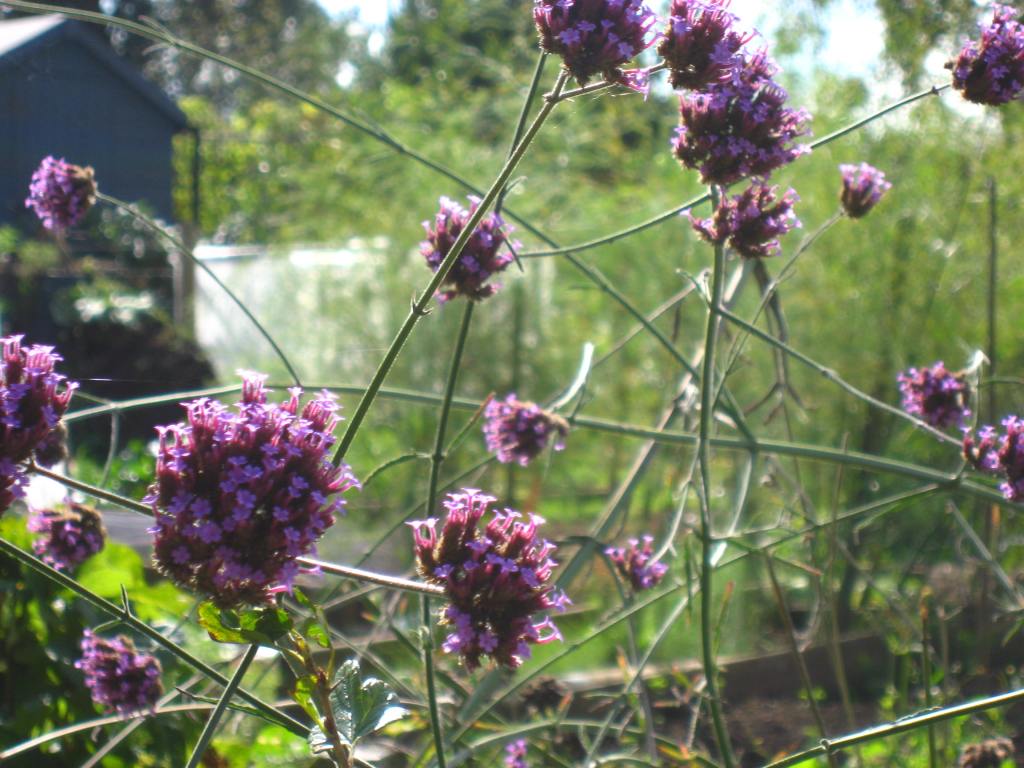

The photos above are mainly from the allotment, and I shall make use of one or two images for reference in regard to creating paintings. I love the purple statice so had to take a close up. When I got back, I refined the sketches just a little in the studio. It was a bit difficult to sketch outdoors and I used only an A5 Size sketchbook and a piece of willow charcoal. The two sketches are below.
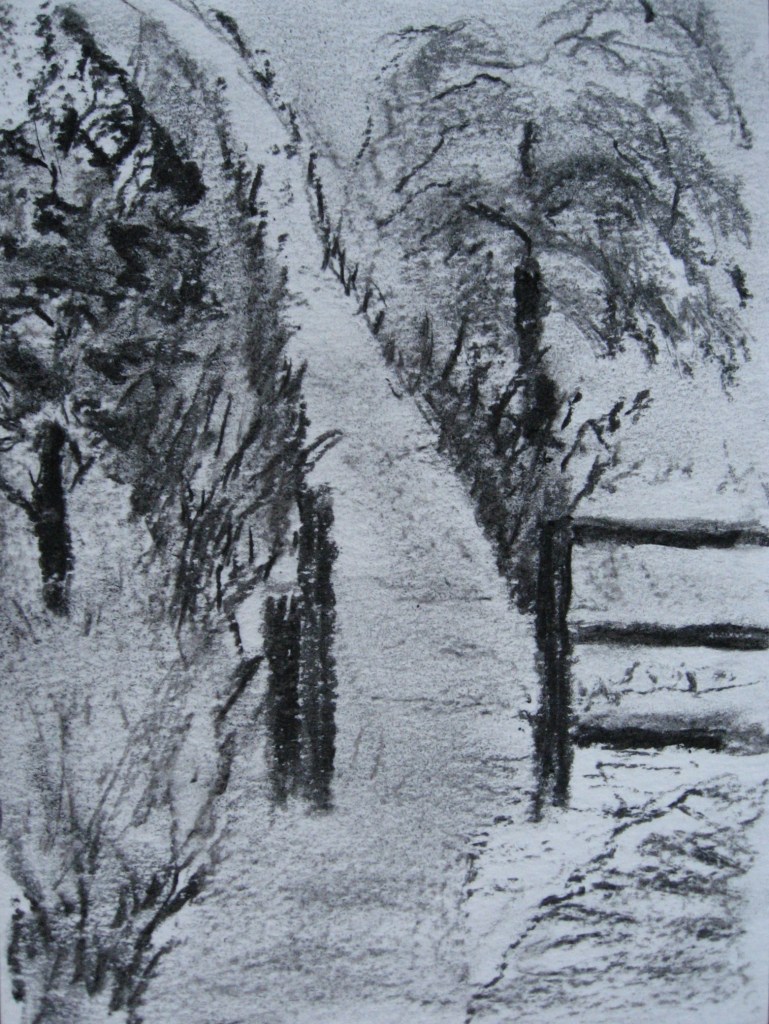
This first one is as I approach the pathway at the side of a stream. I tried to put in the main features such as the gate and fence posts and the two distant trees on either side. My process is always to work quick as you capture more accuracy and the main features. I rotate the charcoal using the fine point of it and the thicker end and press harder for the posts and the main branches of the tree. I smudge a little for the foliage.
The next image is of the mighty ok.

Again, this isn’t perfect, and I concentrate mainly on the tree. The surface and texture of the watercolour paper help as the charcoal glides along the surface. I’m really enjoying working with charcoal. The main trunk could be more finished and furnished with more branches on the right, but it has been cut as its huge. It must be hundreds of years old.
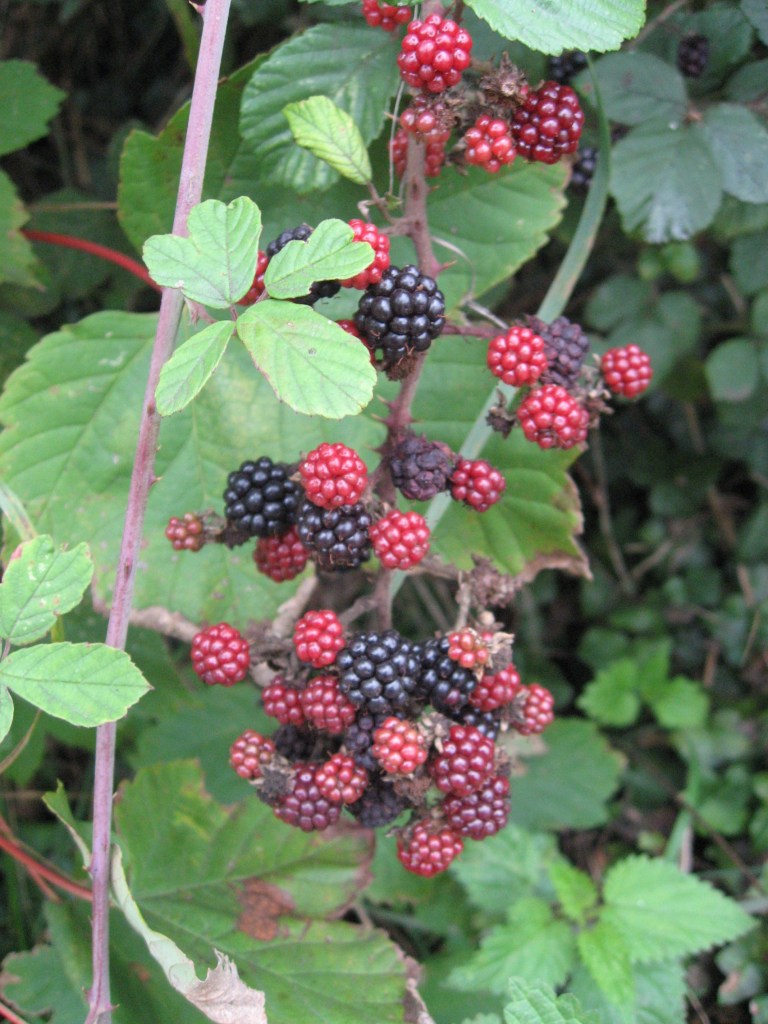
Continuing with the fruits and foraging map I begin to paint a watercolour today. I stretched a piece of A2 watercolour paper and taped to the board and let it dry. I’m painting blackberries and leaves. There will be a lot of bleeding techniques and I hope to achieve a reasonable realism effect on the berries. Once my paper is dry I want to add some washes in and use a large flat 2inch brush. I want the background to have various colour tones. I wet the paper and just add in alizarin crimson and some indigo allowing the colours to bleed and do their own thing as the brush adds in the pigment and glides along the paper, wet into wet and not too deep on colour at this stage.

As I’m overlaying with darker tones and colours, I don’t want the background to be too heavy, but I’m pleased with the result. The areas have bled nicely. I allow the paper to dry after each application however when ready for the next layer I shall re-wet with water the area I work on to develop the painting. My intention is to build up layers of leaves but I want to keep my palette fairly simple browns reds and rust coloured leaves. My main branch will reflect as rusty red brown. I use the side of my 2inch flat to put in my main branch made up of a wash of alizarin crimson and Indian red. As soon as I’ve got this in I still use the same brush and just go for a few leaf shapes. I wet the paper and allow my brush once loaded with a pre-mix of reds and browns plus yellow ochre, to just have a ball on the paper. In my mind’s eye are leaf shapes so I allow my imagination to transfer to my brush. I pre-wet the paper over each area I work on and the brush sometimes permits my leaves to have some serrated edges and numerous different shapes. Sometimes these edges disappear and fade away. Sometimes they are created by the wet into wet. There is always an element of surprise and wander at what my paint can achieve as I submit to it and when I’m unafraid! I sometimes allow the brush to push and pull over the surface and the shapes seem quite serene. After the first few leaves and branch I allow to dry. I then rewet over some leaves and overlay some others. I then allow to dry and reflect. The image of the painting so far is below. I guess I’m still fascinated by Jacques Derrida and different layers of meanings. Layers upon layers, some things visible and what isn’t there can be of great importance. I really want this painting to work well so there will be a lot of pausing and reflection. At this stage I need to put in some of my berries. I consider the composition. I have a couple of photos for reference. One is above but I don’t want to follow any photo exactly. I shall place some berries to the right of the branch in the top middle. Quite a number to the middle left of the branch gliding down to the bottom of the picture. I want to provide good balance.
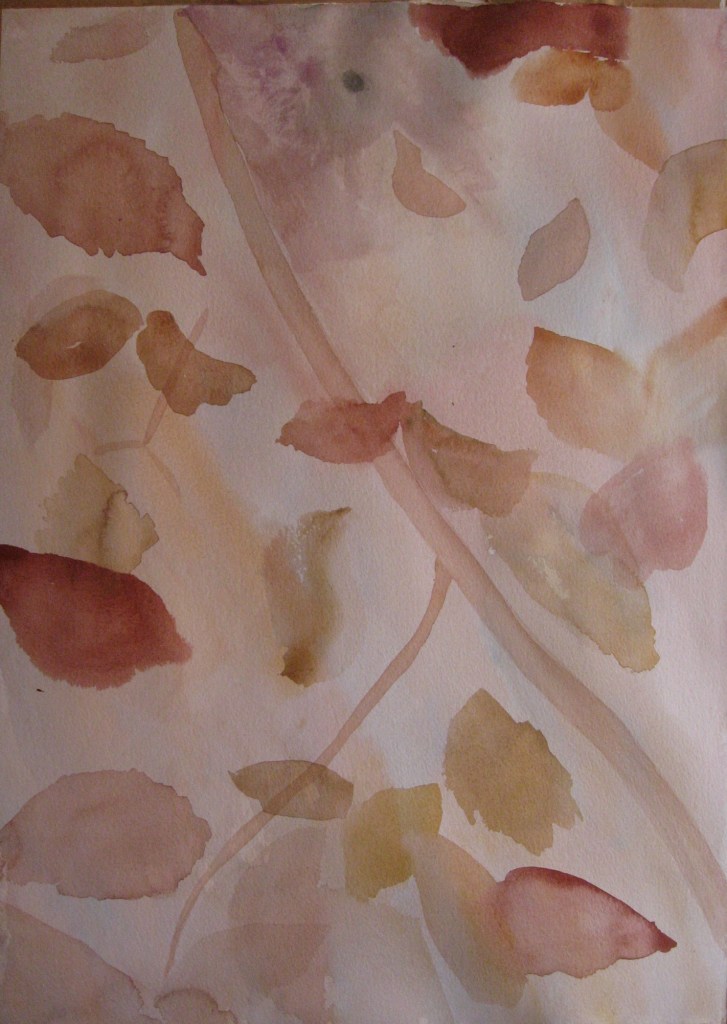
I like some of the bleeding and overlays. My plan will be to put the fruit in place and build up these to look fairly real. I’m aware that if I darken my background, my fruit will stand out more. I hope to achieve this but there is a danger I could overwork the painting.
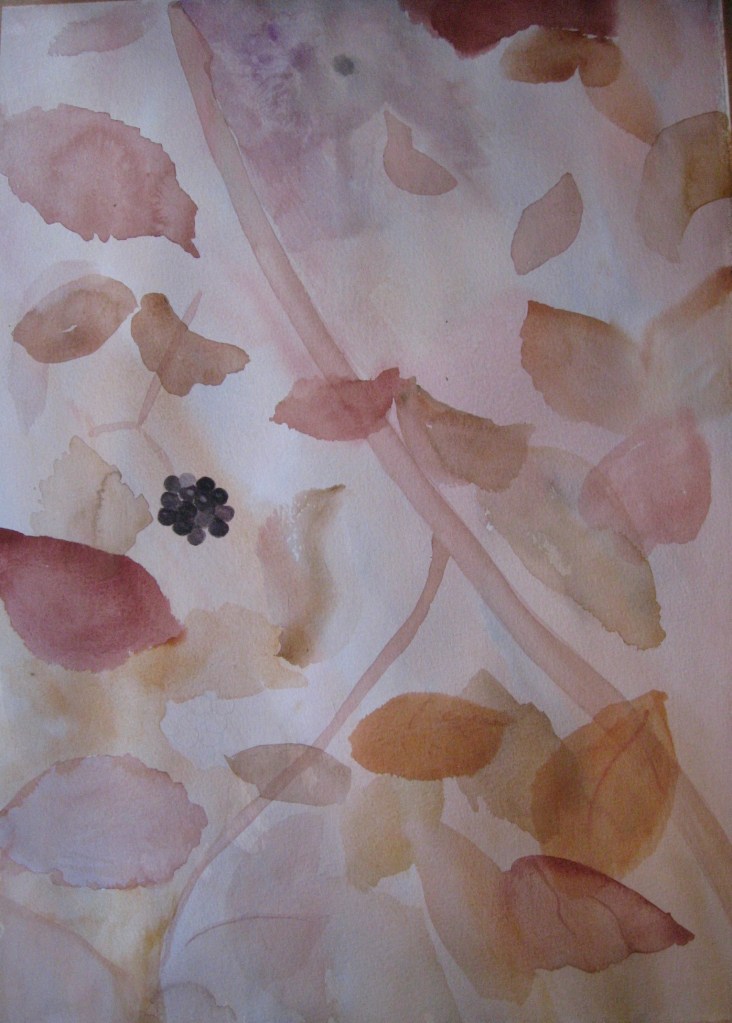
The next image shows the addition of more leaves and my first blackberry. With each piece of fruit, I need to use my fine watercolour brush pen. This gives me more control as its synthetic fibres allow me the courtesy of placing my marks in the chosen spaces and to hold the desired amount of pigment. I draw in pencil each berry allowing them to have slightly different shapes and to reflect hopefully how nature intended them.
I continue to build up more berries as below. The image shows my pencil marks and the colour variations as I build up my berries. It’s important that some are a little hidden behind the others and the contrast of the red and black is good. In the ideal world I’d like the viewer to feel they could pick the berries as if off the tree. Maybe one day!
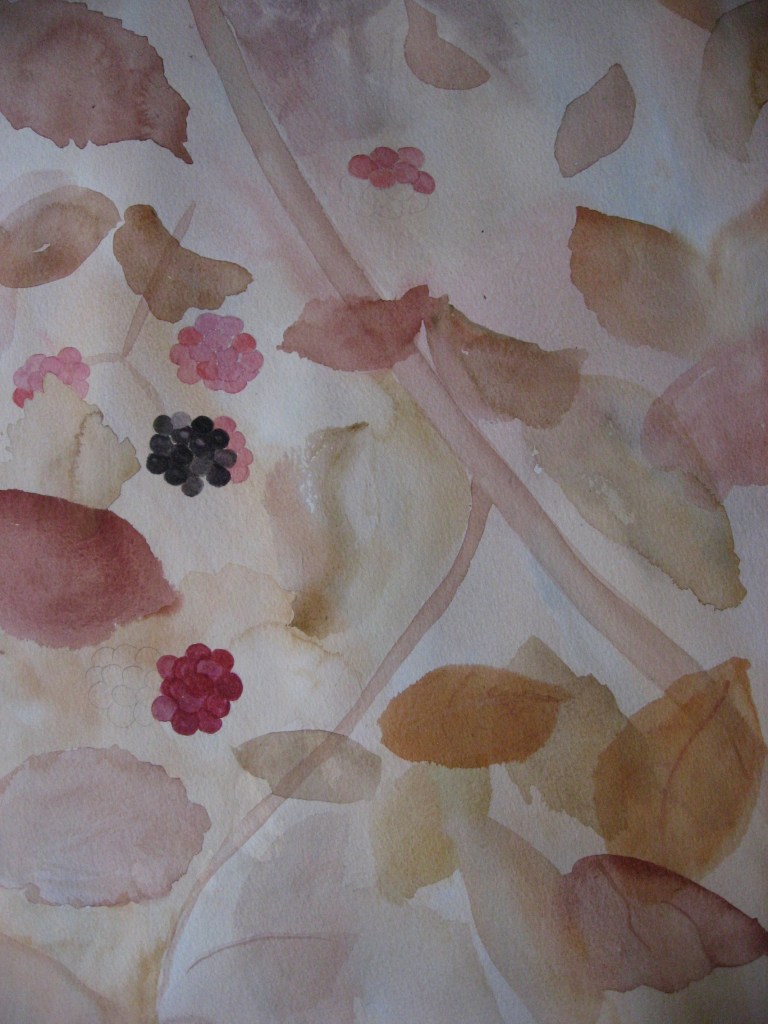
It becomes a painstaking process as I paint each individual circular particle of the berry. I create shape and form as I progress by building up colours and different shades. I also make darker the in-between spaces. What I don’t do at this stage is put in the reflected light on the berries. I hope to put this in with a white coloured pencil. I learned on Painting Two that white gouache was a bit heavy so I will try the pencil. Although the berries are time consuming, I really get lost in creating them and enjoy how they are shaping up. I mainly use alizarin crimson for the red berries and paynes grey, sometimes with a little purple added for the black berries. Below is almost the final berry application. As I stop and reflect I do like the fact that on the left I’ve almost hidden one behind a leaf. I think this berry and the leaf gives a sense of recession so I might not add another layer of paint. I do think I need one or two more berries to create more of a cluster to the middle left. However, I must be careful as I don’t want to paint over important leaves. I do like the shape and form to the berries, and this is coming along nicely. As I look further, my branch also needs a little more definition.
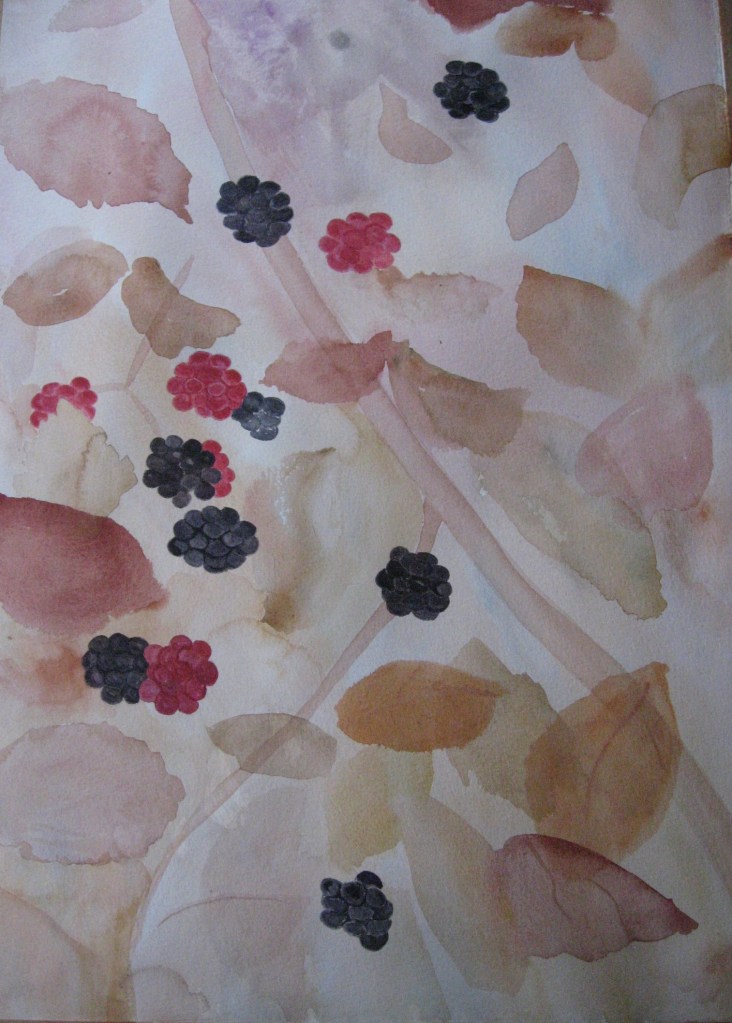
The image below shows how I have completed the berries and started to build up mopre leaves in all areas and I’ve started to add more colour to the main branch through wet into wet to add some shape and form. By adding denser colour my fruits really begin to stand out and are quite vibrant.

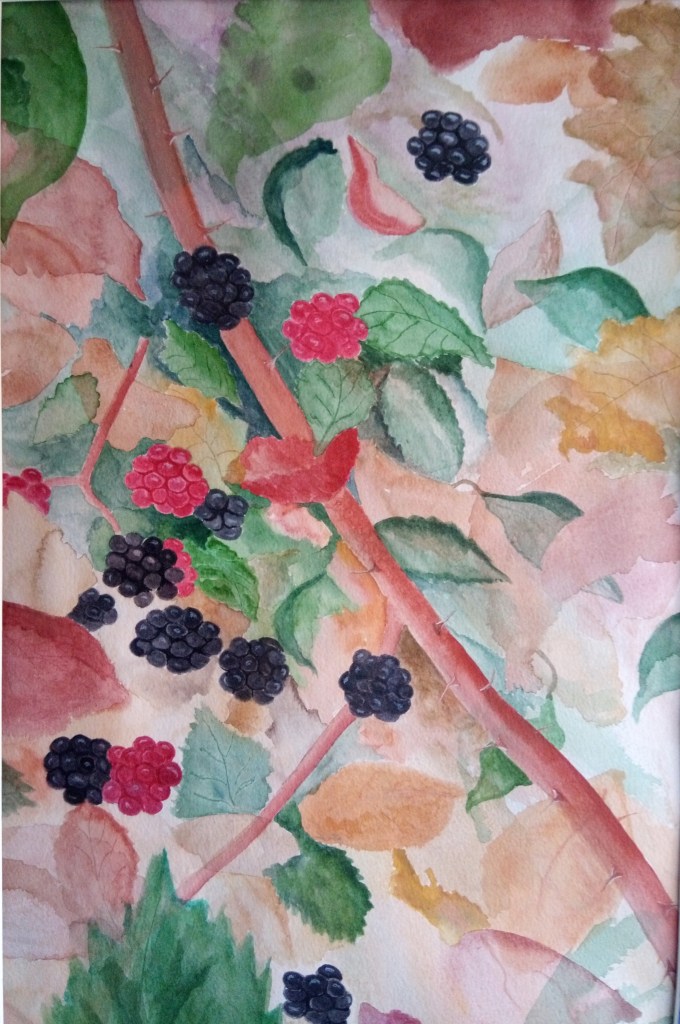
In this close up of the fruits below you can see how I’ve created the form through the darker black and reds. I capture the lines in any leaves by just indenting into the wet paint with the end of a pencil. The colour then just masses in the line giving a more natural look. Some of the bleeding wet into wet has also worked reasonably well.

In the image below I’ve built up more on the fruits and have added the sharp spikes to the branches. There’s also a few more leaves to help balance out the composition. The white pencil has worked well on my fruit. The key is not to work too heavily and vary the placement as the natural light would fall. I could make some of the background a little darker, but I don’t want to lose some of the subtle marks.
 Drawing 2 Interpreting the environment